Part 1 of a Series on Plant Parts
Flowers Are For Ascending Energy and Dispersing Heat
Would you like to understand how herbal medicine works? This series is a fun read with some historical and botanical underpinnings that lend meaning to the story of herbalism.
One of the earliest methodologies for cataloguing herbal remedies was based upon the “doctrine of signatures,” an approach that purports that a plant’s morphology resembles and is similar to the symptom, disease, or organ (Wood, 2004). Another interpretation is that the outer appearance of a plant or its environment will reveal its medicinal properties (Graves, 2012).
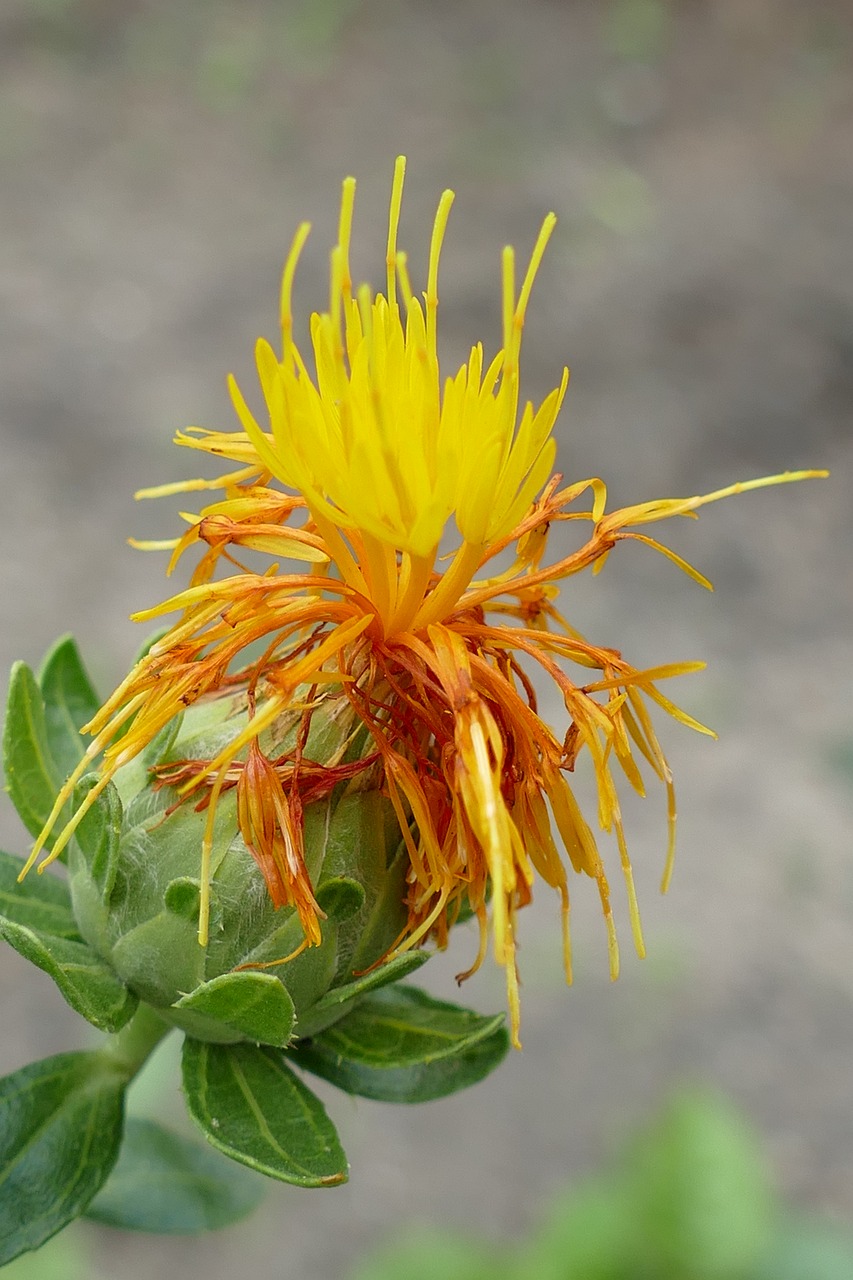
By examining the unique characteristics of the plant, that is, its colors, aroma, shapes, and parts, its uses were seen and translated to human needs. These examinations were often intricate, like the number of petals and leaves, the shape of the flowers or buds, and the various parts from root to leaf to flower (Graves, 2012). For example, the red color of a flower infers heat-clearing and anti-inflammatory properties, as illustrated by Bloodroot (Sanguinaria canadensis L.) rhizome that controls blood rushing to the head, as with a migraine (Graves, 2012). In Chinese materia medica, the brightly colored safflower (Flos Carthami Tinctorii), hong hua, invigorates blood to ease pain in skin, joints, and chest (Hempin & Fischer, 2009).
Flowers lift and disperse
The flower or bloom, is light and ascending by nature, and therefore, used for conditions in the upper body, especially the head and face. Peppermint (Mentha x piperita) leaf, bo he, is used to open the upper orifices and also for any stuffiness of the ears, nose, and head. A common herb to treat hypertension, with red eyes and flushing of the face is chrysanthemum (Chrysanthemum × morifolium) flower, ju hua.
Peppermint (Mentha x piperita) leaf, bo he, yarrow (Achillea millefolium) flower, ya luo, spearmint (Mentha spicata) leaf (not classified in Chinese herbal medicine), lavender (Lavandula angustifolia) flower, xun yi cao, and Japanese honeysuckle (Lonicera japonica) flower, jin yin hua, are all herbs that clear heat from upper jiao. According to Native American tradition, Japanese honeysuckle (Lonicera japonica) flower and chrysanthemum (Chrysanthemum × morifolium) flower are very effective antimicrobials, and are used to relieve fever and inflammation in cases of sinusitis (Kawinsenhawe, 2020), and peppermint (Mentha x piperita) leaf is a diaphoretic that relieves sinus congestion by facilitating transportation of waste products (Kawinsenhawe, 2020).
Future posts will describe the other parts of the plants and herbs and their correspondences, including twigs, leaves, barks and roots.
REFERENCES
Graves, J. (2012). The language of plants: A guide to the doctrine of signatures. Great Barrington, MA: Lindisfarne Books.
Hempin, C. & Fischer, T. (2009). A materia medica for Chinese medicine: plants, minerals, and animal products. United Kingdom: Churchill Livingstone.
Kawinsenhawe, T. (2020). Native American Herbal Apothecary: 2 BOOKS IN 1 Herbalism encyclopedia & herbal dispensatory Ebook. United States: New Era Solutions
 Channel Acupuncture & Herbs