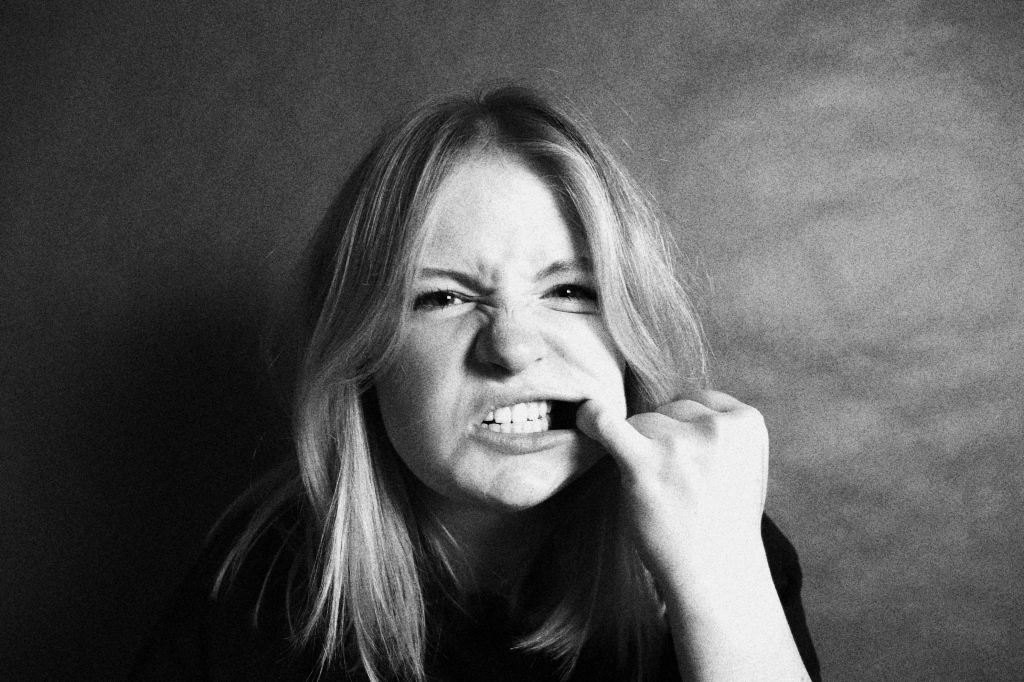
I have learned that there are many contributing factors that make this small joint on the face lock up tight. So many variations happen in practice that are hard to translate into the written word. It astounds me that no two people are ever alike.
How to choose the best mode of treating really depends on the chronicity, severity, and co-existing factors. Some common denominators in my patient population have included:
- Forward head posture from repetitive use of computer or at a desk
- History of neck tension either from injury or stress
- Dental issues such as pain from dental procedures, multi-teeth removal
- Bruxism, grinding of teeth
- Malocclusion of upper and lower teeth
- Headaches, typically tension-type and sometimes migraine
- Anxiety or high sympathetic tone
Not all of these are reported at any one time, or by any one patient. These are simply commonly reported issues or conditions seen by me or reported by patients.
My treatment style is to blend acupuncture with massage, cupping, moxibustion and ear points (auriculotherapy). I typically choose two of these so that I can streamline therapy and get the best possible result.
Auriculotherapy is not only effective for jaw pain, it offers a stimulus that the patient can continue to use after the treatment since points can be rubbed for about a minute or two, up to five times a day. In this way, the pathway between brain and jaw is engaged in order to provide the signal to release the muscles of the jaw. Studies indicate that auriculotherapy is as effective as conventional therapy (medications) in reducing jaw pain (Ferreira et al., 2015) and that it helps reduce anxiety associated with jaw pain (Iunes et al., 2015).
How does auriculotherapy work for jaw pain?
The ear is kind of like a sophisticated transmitter that quickly emits signals back and forth from the brain to the body. In fact, certain nerves can be accessed through the ear points. The trigeminal nerve is accessible on the ear, and is a useful point since it travels to the jaw itself, as well as to the cheek and eye. The trigeminal nerve covers a large area of the face so it can help to stimulate this point to fire up small neural fibers that balance tension in the muscles of the face.
The points Lower Jaw, Upper Jaw, and TMJ are all located on the lobe of the ear. Each of these points helps open up the area, send lymph and calm muscle tension through a biofeedback loop that is created with an ear seed.
Sympathetic is another point on the ear often employed. This one is especially useful because it relaxes muscles that are tense due to stress or anxiety. According to Dr. Li-Chun Huang, the Sympathetic point relaxes the peripheral muscles and opens up circulation quickly, thereby relieving spasms and long-held tension.
If there is head pain associated with jaw pain, I will sometimes add headache points such as Vertex, Occiput, Temple and Forehead. These are chosen by location of headache. Cervical Neck muscle and spine points may also assist.
What is an auricular treatment for jaw pain like?
Auricular treatment for jaw pain may be performed simply by placing seeds on the points typically indicated, as listed above.
If there is a high degree of tension in the muscles of the neck and shoulder, or digestive issues, other points may be added to adjust the body’s systemic issues.
Sometimes a full auricular treatment that includes ear massage, detection of points with an ear probe, blood-letting of the auricle (outer rim of ear, and it is painless), and seed rubbing is given. Ear massage has wonderful benefits all its own including boosting micro-circulation, detoxifying the body, and improving the texture of the skin.
Anxiety and insomnia may accompany tough cases of jaw pain. Ear massage to the brain and emotional and nervous system axes on the ear greatly assist with these problems.
self help for jaw pain
- Whole Body Movements. Hypertonicity of the muscles of the shoulder and neck is translated upwards to the head, face and jaw due to the kinetics of the body. I always recommend using the whole body to stretch and also walking on a regular basis. Stretching only one part of the body at a time may feel good and offer benefits, but it is equally important to boost circulation by engaging all of the big muscles.
- Also do specific exercises to reinforce proper alignment of the jaw. This link shows some very good exercises to relieve jaw pain, from Healthline:
https://www.healthline.com/health/tmj-exercises#exercise
- Liquid protein. The muscles of the jaw are small but powerful. In fact, the muscles of mastication, the ptyergoids and the masseter, do more work per load than any other muscle in the body. When they become inflamed one of the best remedies is to consume a protein shake made of whey or pea protein. Proteins are building blocks of muscle and will help the jaw area heal much faster.
REFERENCES
Huang, LC. (2005). Auricular medicine: The new era of medicine & healing. Auricular medicine center.
Deadman, P. & Al-Khafazi, M. (2007). A manual of acupuncture. Journal of Chinese medicine publications.
Ferreira L., Grossmann, E, Januzzi, E, Gonçalves. R., Mares F., de Paula, M., & Carvalho, A. (2015). Ear acupuncture therapy for masticatory myofascial and temporomandibular pain: A controlled clinical trial. Evidence Based Complementary & Alternative Medicine, 342507. doi: 10.1155/2015/342507.
Iunes, D., Chaves, C., Moura, C, Côrrea, B, Carvalho, L., Silva, A. & de Carvalho, E. (2015). Role of Auriculotherapy in the treatment of temporomandibular disorders with anxiety in university students. Evidence-Based Complementary and Alternative Medicine. 2015:430143. doi: 10.1155/2015/430143. Epub 2015 Oct 1. PMID: 26495012; PMCID: PMC4606196.
 Channel Acupuncture & Herbs